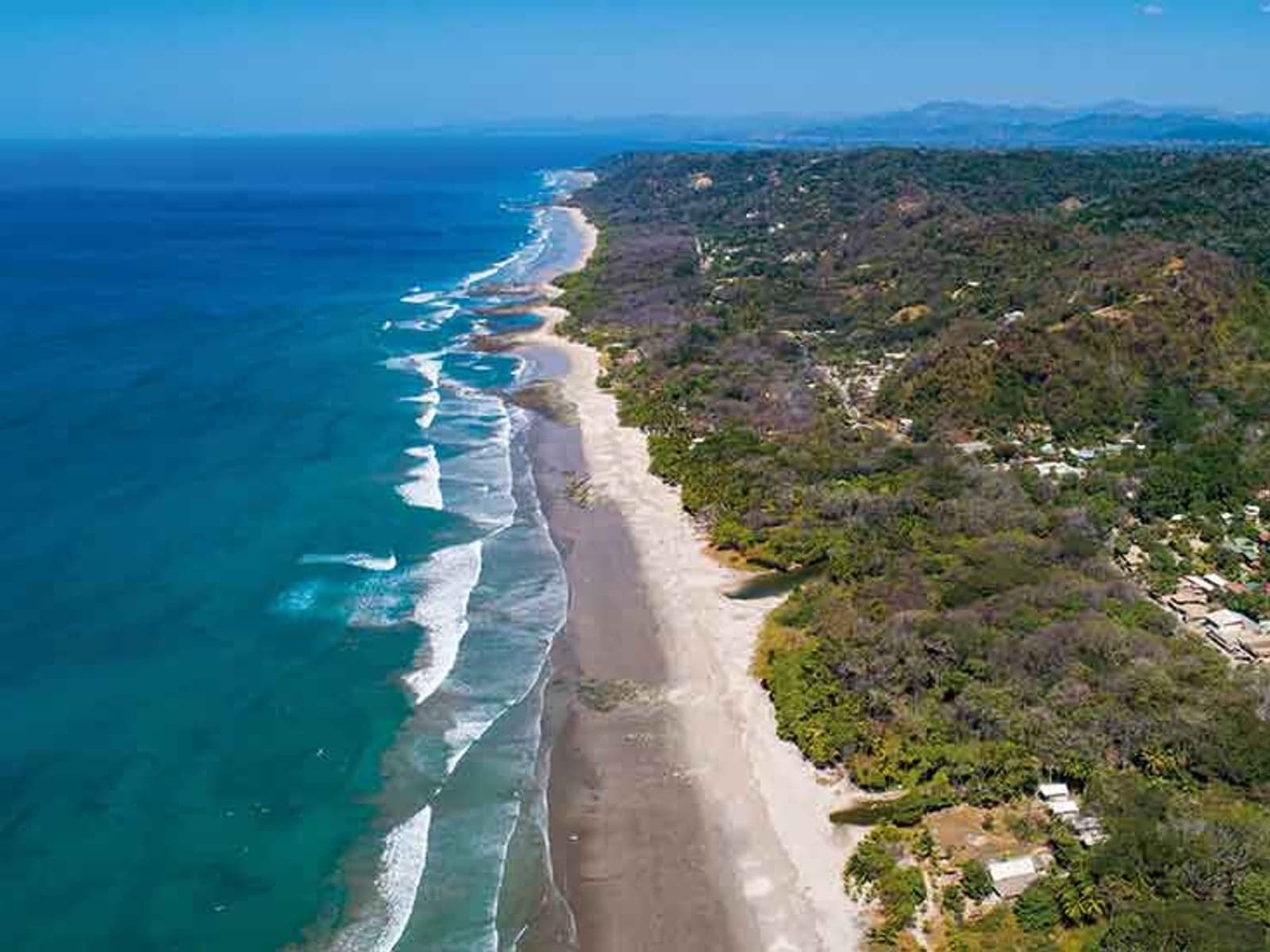
Aerial view of Playa Santa Teresa coastline, Nicoya peninsula

Santa Teresa · The Orientation

A fishing villagethat became a town.

What Santa Teresa is, how to get here, when to come, and how to plug in. Written by people who live here.

Santa Teresa · Right now

Loading…

  • DIRT ROAD
  • PACIFIC
  • BLUE FLAG
  • 5:45 SUNSET
  • PURA VIDA
  • NO STOPLIGHTS
  • ATV CULTURE
  • HOWLER WAKEUP
  • MONKEYS CROSSING
  • SURF · YOGA · CASADO

The geography

A 5 km dirt road, four beaches, one Pacific.

Santa Teresa stretches roughly 5 km along the southern tip of the Nicoya Peninsula in Puntarenas Province, on Costa Rica's Pacific coast. The town is anchored by a four-way intersection called Playa Carmen — the closest thing to a downtown. South of Carmen is Mal País, still a small fishing village. North along the unpaved road is Playa Santa Teresa proper, and ten minutes further north is Playa Hermosa — the longboard wave.

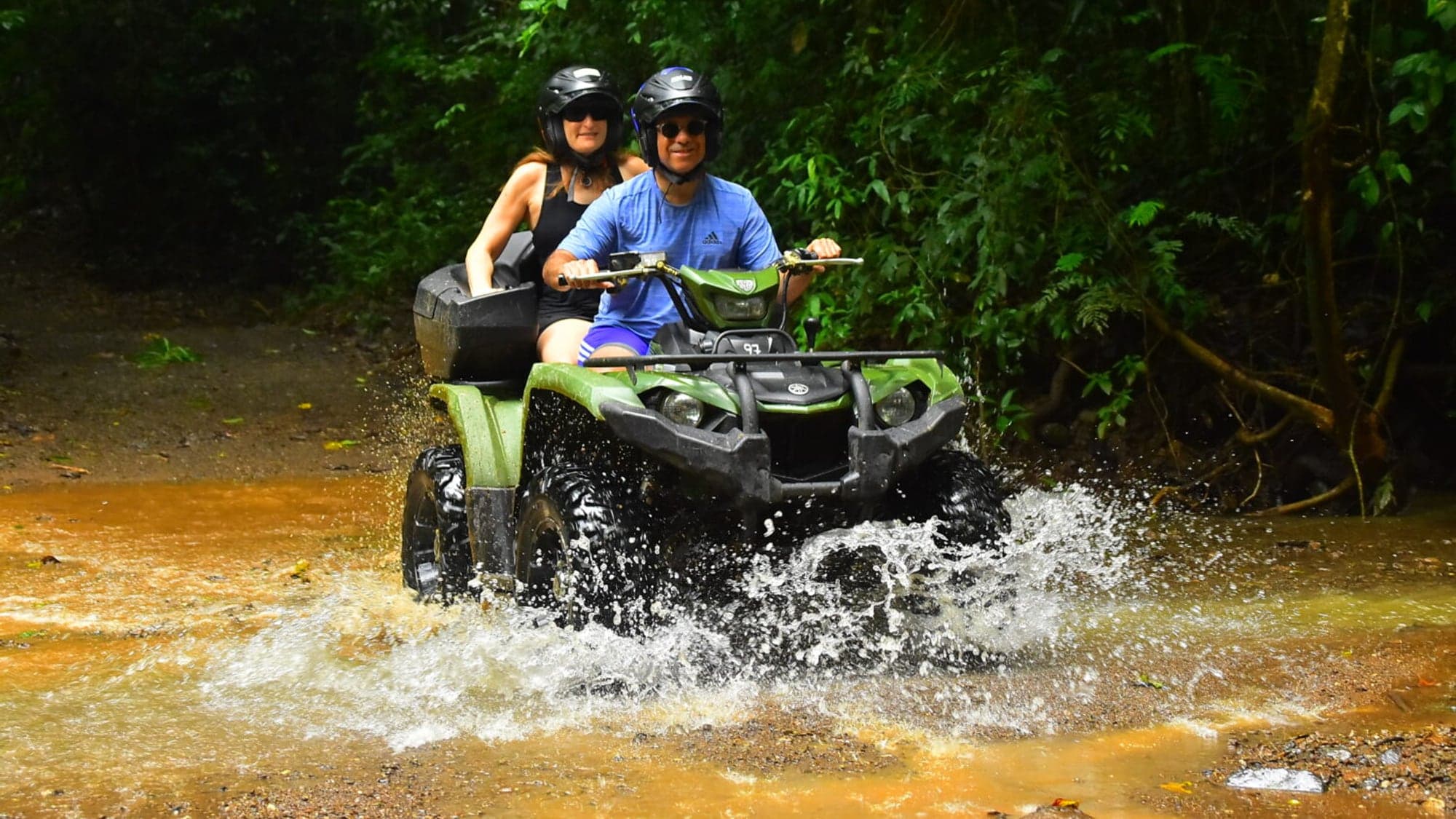
The dirt road runs the length of all four beaches. There's no stoplight. Most travel happens by ATV — half the town drives one, including the locals dropping kids at school.

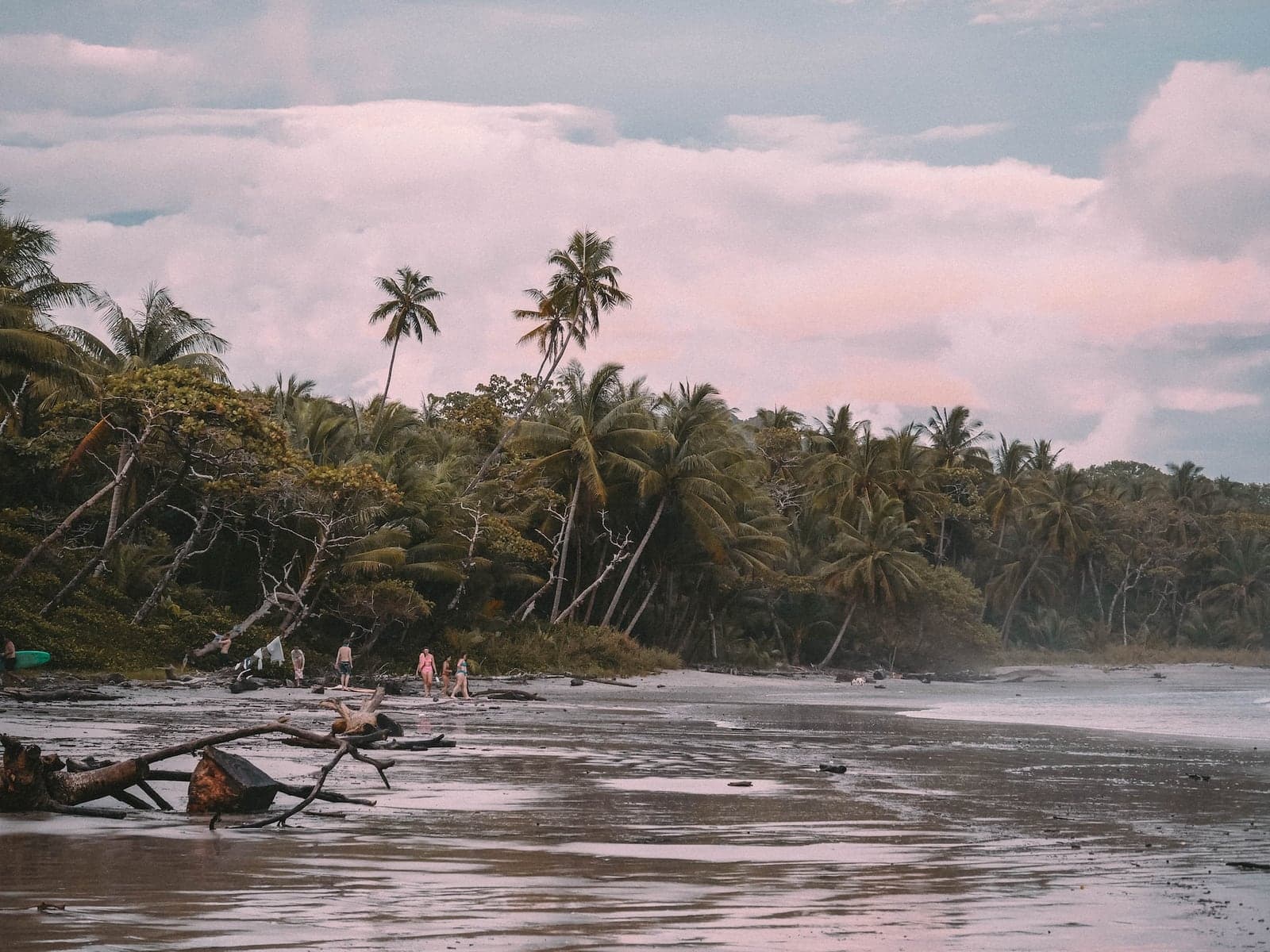
Driftwood and palms on a quieter stretch of Playa Santa Teresa

A two-century timeline

From the end of the road to the wellness map.

The town has gone through five eras in the last two hundred years. Scroll through.

  1. Pre-1825

    Indigenous & Spanish colony

    Part of Nicaragua.

    The Nicoya Peninsula was Chorotega indigenous land for centuries, then Spanish colony territory administered out of Nicaragua. The whole peninsula joined Costa Rica in 1824 by a referendum the locals still celebrate every July 25.

  2. 1825 – 1960s

    Fishing & cattle

    A village at the end of the road.

    For 140 years, Santa Teresa was rice, beans, fishing line, and a small herd of cattle. The dirt road ended at the beach. The land was held by a handful of families; the only way in was by boat or 4×4. No grid, no light pole, no signal.

  3. 1963

    First conservation

    Cabo Blanco protects the wild.

    Swedish-Costa Rican couple Olof Wessberg and Karen Mogensen buy 3,100 acres next door and convince the government to make it Costa Rica's first absolute nature reserve. The whole national-park system traces back to this purchase, twenty-five minutes south of where the villa sits today.

  4. Early 1990s

    Surfers find it

    The first board on the beach.

    Word gets out. Backpackers and surfers from Israel, Australia, the US, and Argentina start sleeping in tents on the sand. The wave is consistent, the lineup is empty, the beer is cheap. Rumor moves down the coast.

  5. Mid 1990s

    Electricity arrives

    First light bulbs.

    The first electricity grid reaches Santa Teresa. Before this — kerosene lamps, generators, candle-lit dinners. After this — the first hostels, the first restaurants with refrigeration, and the slow start of the town as a town.

  6. 2006

    International recognition

    Forbes calls it 'top 10 in the world'.

    Forbes Magazine names Playa Santa Teresa and Mal País 'one of the ten most beautiful beaches in the world'. Tripadvisor follows with 'Best Beach in Central America' (twice). Mel Gibson, Gisele Bündchen, and others buy land. The Blue Flag for clean beaches stays.

  7. 2016

    The next Tulum

    NYT and the wellness wave.

    The New York Times runs a piece calling Santa Teresa 'the next Tulum'. Yoga retreats multiply. Real-estate prices climb. The dirt road stays dirt. Tom Brady, Kourtney Kardashian, Ryan Seacrest get photographed at the beach. The locals shrug and stay open.

  8. Today

    5 km of dirt road

    Surf, yoga, slow food.

    Thirty restaurants worth knowing. Six yoga shalas, two reformer Pilates studios, the most advanced recovery club on the peninsula. Starlink in most rentals. Howler monkeys still on the morning shift. The road is still dirt and the town still closes at midnight on a Tuesday.

When to come

Two seasons. Both are good.

UTC−6, no daylight savings. Sunrise around 5:30am, sunset around 5:45pm year-round (short twilight near the equator). Tropical heat all year with afternoon storms in green season.

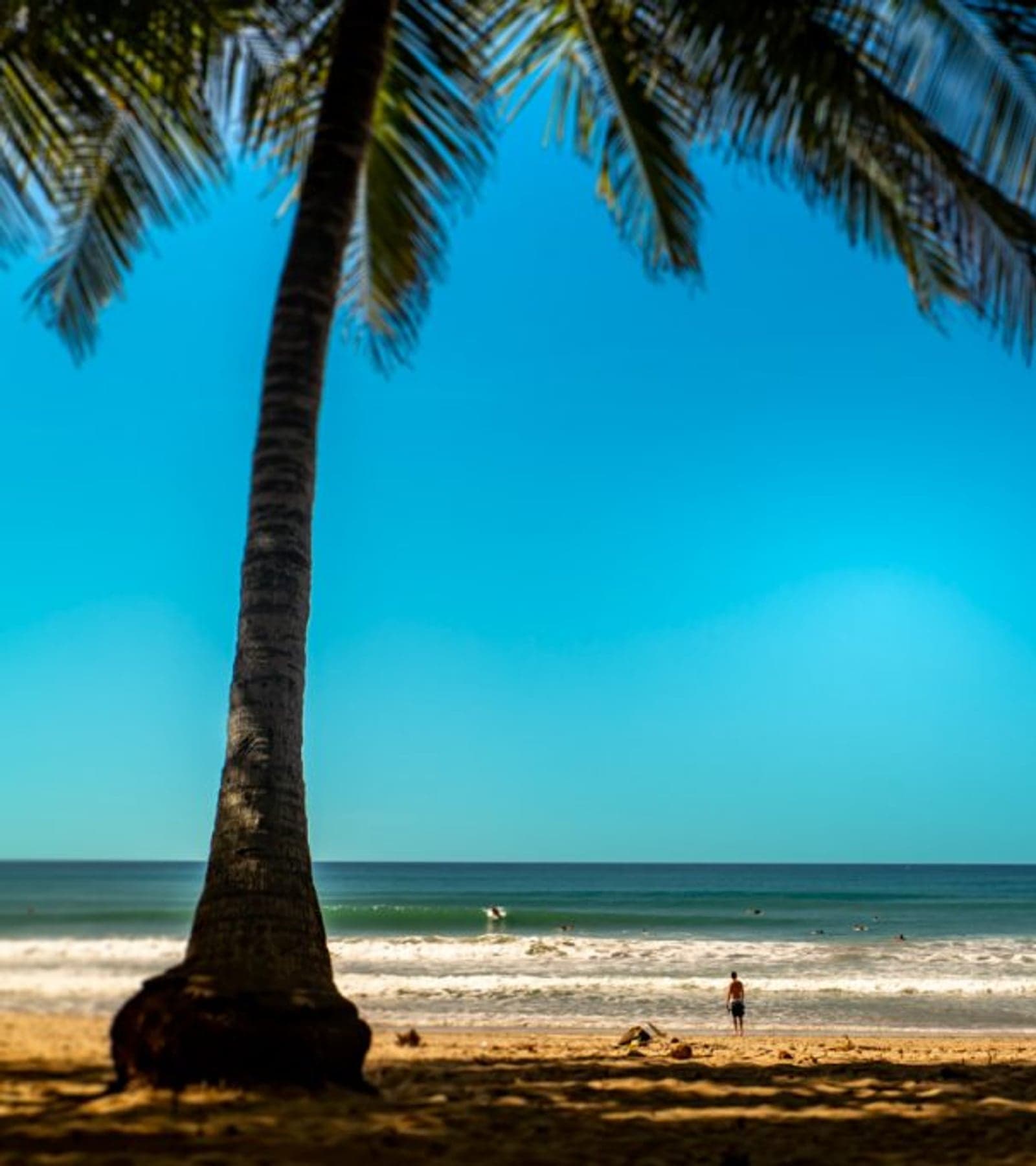
Dry season at Playa Santa Teresa — palm tree silhouette, bright blue sky, deserted beach

Dry · Dec–April

Sunny, busy, photogenic.

Almost no rain. Clean offshore mornings. Surf consistent and mid-sized. Crowds peak Feb–March. Christmas + New Year are the most-expensive weeks of the year — reservations close 3–6 months out. Powdery dust on the dirt road.

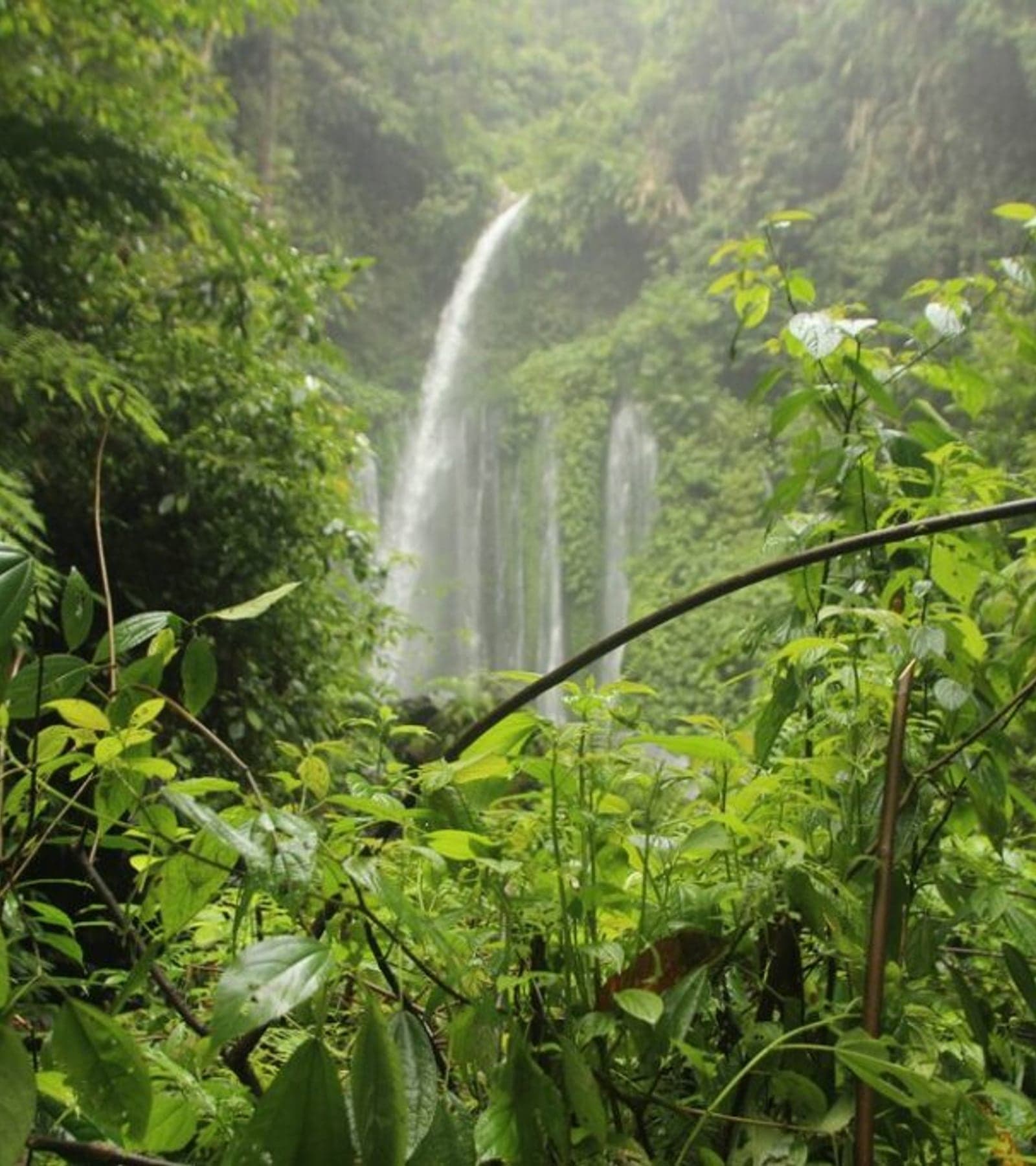
Green season in Costa Rica — lush jungle waterfall, electric-green canopy

Green · May–Nov

Quieter, wilder, fewer crowds.

Mornings still gold. Warm afternoon storms — predictable, brief, brief. The jungle goes electric green. Surf is bigger and lineups thin. October is the wettest month. Best long-stay value: late May–early July, and November.

Month by month

A year in Santa Teresa.

Hover any month to see the surf, the crowd, the rain, and the vibe — pick the trip that matches what you're after.

Shoulder

May.

Afternoon storms start. Mornings still gold. Best long-stay value.

Best for  ·  Quiet seekers · retreats

Air temp
27–32°
Rain
Building
Crowd
Low
JanFebMarAprMayJunJulAugSepOctNovDec
Swell
CrowdPeak
Peak
Peak
High
Low
Low
Med
Med
Very low
Very low
Low
High
Rain
Air26–32°27–33°28–34°28–34°27–32°26–31°26–31°26–31°26–30°26–30°27–31°26–31°
Hover any month for details This month Peak dry Shoulder Green big

Now you know the town

Sleep above it.A short walk down to all of it.

Casa Calyx sits ten minutes up the mountain from Playa Santa Teresa — close enough to walk to dinner, far enough that the cicadas, not the bars, are what you hear from bed.

Getting here

Five ways from San José.

The peninsula has no highway and no scheduled jet airport — every route is a combination. Below: fastest to cheapest, with the trade-offs.

  1. 01

    Fly SJO → Tambor / Cobano (fastest)

    Sansa Airlines or Costa Rica Green Airways fly San José SJO to Tambor (TMU) or Cobano (CBO) in ~30 minutes. Then a 45–60 min taxi or pre-booked shuttle into Santa Teresa. Strict baggage limits — surfboards cost extra. Best if you're short on time.

    Time
    ~2.5 hrs
    Cost
    $110–180 + $40–50 transfer
  2. 02

    Private SUV shuttle (most comfortable)

    Door-to-door driver picks you up at SJO, handles the ferry tickets and routing, drops you at the villa. The driver carries the ferry tickets and waits with you. Best for groups of 3–4 — splits cleanly.

    Time
    ~4–5 hrs
    Cost
    $280–350 (1–4 people total)
  3. 03

    Shared shuttle (sweet-spot value)

    Tropical Tours, Interbus, and others run daily shared vans from SJO + downtown San José hotels at 5:30am, 6:30am, and 2pm. Ferry ticket included. Good middle ground between bus and private.

    Time
    ~5 hrs
    Cost
    $50–80 per person
  4. 04

    Rent a 4×4 + drive yourself

    Route 27 west to Puntarenas (~2 hrs), Naviera Tambor ferry to Paquera (75–90 min, $25 + $2/passenger), then ~70–90 min south to Santa Teresa. Book the ferry on QuickPayCR if you can. Don't try to drive the last hour at night.

    Time
    ~5–6 hrs
    Cost
    ~$25 ferry + rental
  5. 05

    Public bus (cheapest)

    Transportes Cobano runs twice daily (6am, 2pm) from Terminal TIG / 7-10 in San José. Ferry crossing as a foot passenger included. Pay at the counter; arrive 30 min early. The slow scenic route.

    Time
    ~6 hrs
    Cost
    ~$17
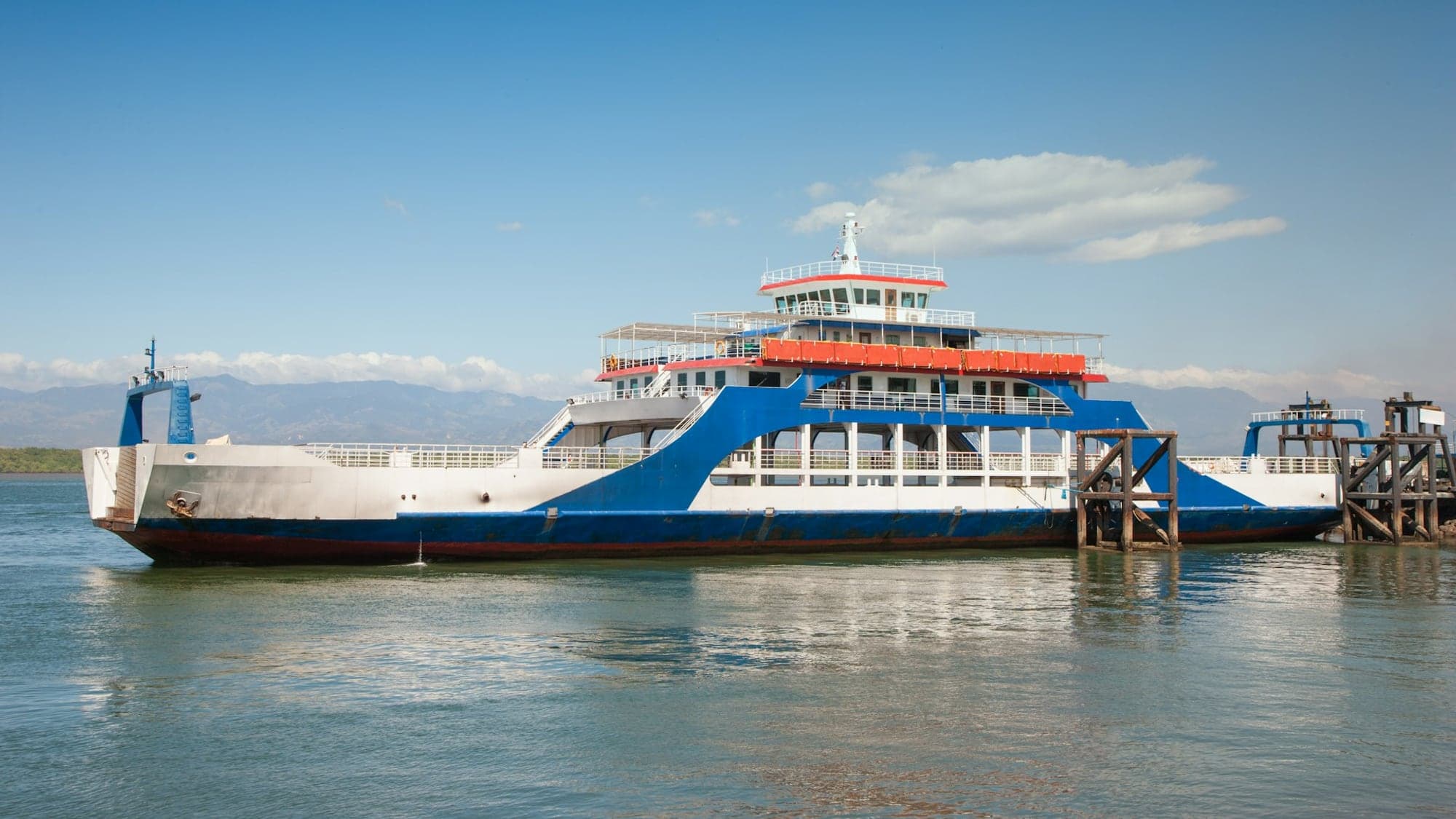
Naviera Tambor ferry that crosses the Gulf of Nicoya between Puntarenas and Paquera

The choke point

The Puntarenas–Paquera ferry is the single most important variable in the journey. Missing the morning departure by ten minutes means waiting 2+ hours for the next one — plan with buffer. The crossing itself is the prettiest part of the trip: 75–90 minutes across the Gulf of Nicoya with pelicans in the wake.

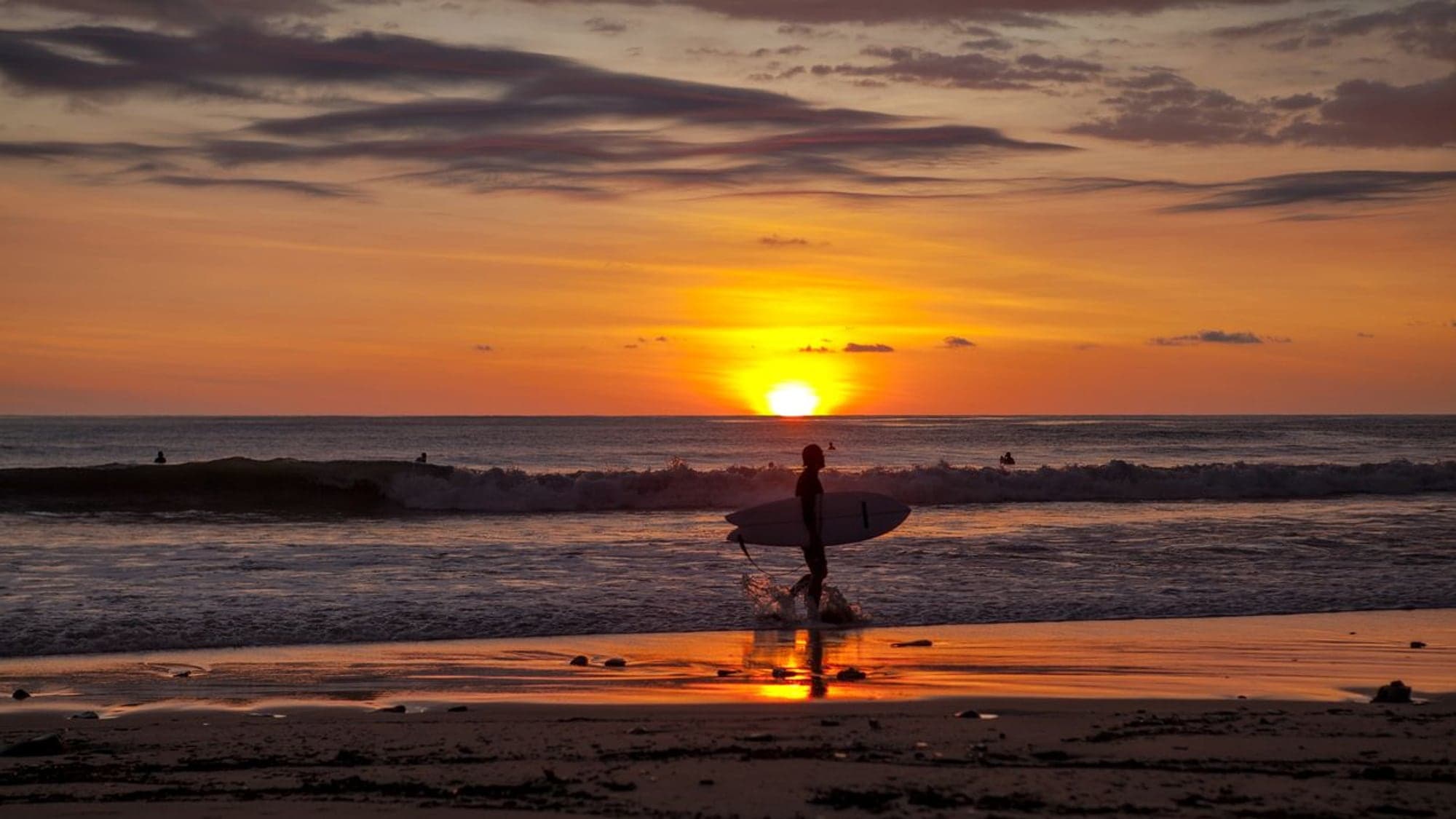
Surfer silhouette walking the Santa Teresa beach at sunset

From the locals

“Pura vida isn't the slogan — it's the operating system. Slow down. Say yes to invitations. The sunset is at 5:45 every day.”

— Local welcome

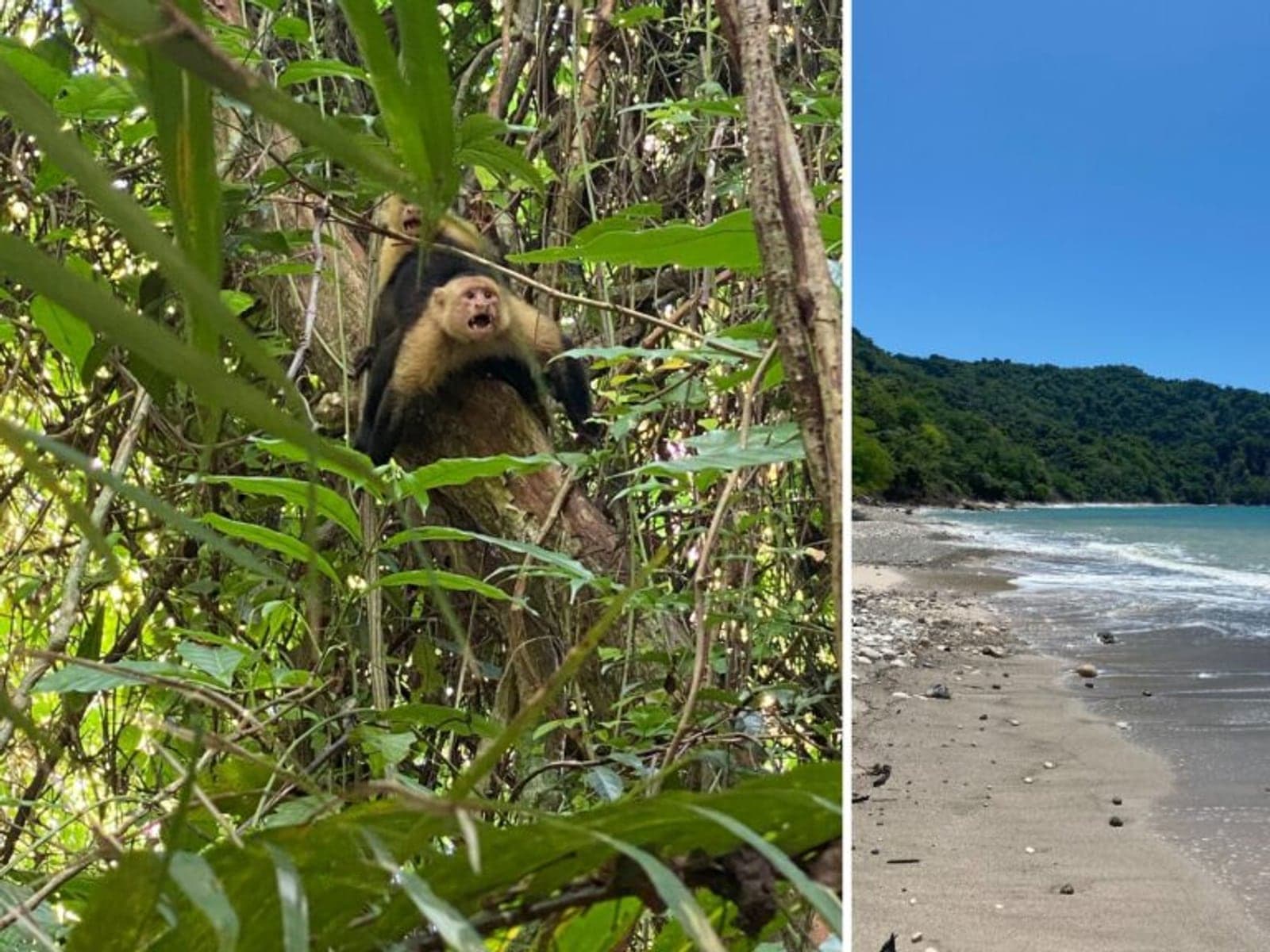
Capuchin monkey in the jungle and a deserted beach at Cabo Blanco Absolute Nature Reserve

The natural backdrop

Costa Rica's first protected reserve is next door.

South of Mal País, the Cabo Blanco Absolute Nature Reserve covers 3,140 acres of jungle and 4,420 acres of coastal marine zone — established in 1963 by Olof Wessberg, making it the first protected area in all of Costa Rica. Howler and capuchin monkeys are the headliners; white-tailed deer, anteaters, sloths, and three monkey species share the canopy. The 4.5 km Sueco Trail ends at a remote white-sand beach with a fresh-water tap and no crowds.

Closer to the villa, monkeys cross the road at dawn, geckos work the walls, and the Pacific delivers a beach you can walk for 5 km without seeing another set of footprints. The whole peninsula holds the Blue Flag for clean beaches.

Practical

What you actually need to know.

The unglamorous stuff that matters — internet, money, water, driving, and how to plug into the town in 48 hours.

Internet & remote work

Starlink, fiber, and a backup.

Kolbi fiber hits 50–100 Mbps in town and drops in storms. Starlink-equipped accommodations (including Casa Calyx) get 50–100 Mbps reliably. Coworking options: Outsite Santa Teresa, Selina, Aire Eco Cowork, and Cafe Social for laptop-friendly tables. Buy a Kolbi or Claro SIM at SJO for mobile backup ($11 for 10GB).

Money & payments

Bring both currencies.

Costa Rican Colones (CRC) is official, USD is accepted nearly everywhere. Cards work at most hotels, restaurants, and shops. Sodas, ATV rentals, and beach vendors are cash-only. Two ATMs in town — they occasionally run dry, so withdraw early. Tipping: 10% is added on most restaurant bills; an extra 5–10% for great service is appreciated.

Water & food safety

Filtered, not tap.

Tap water in Santa Teresa comes from local wells — fine for brushing teeth and rinsing produce, but most travelers drink bottled or filtered. Casa Calyx has a filtration system on the kitchen tap. Restaurants serve filtered water by default. The local seafood, casados, and produce are excellent and safe.

Health & medical

Clinic in town, hospital in Liberia.

EBAIS basic-care clinic in Santa Teresa for minor things. Cobano has a larger clinic 25 minutes away. Serious cases evacuate to Liberia (3–4 hours) or San José (5–6 hours). Travel insurance with adventure-sports and medical-evacuation cover is recommended. Bring DEET for dawn/dusk — dengue is around but uncommon.

Safety

Small-town, smart-traveler.

Generally safe. Don't leave valuables on the beach, in a parked car/ATV, or anywhere visible. Watch surf conditions — rip currents are real (swim parallel to shore if caught). The road is dark at night; use a phone flashlight if you're walking. Pantera Taxi for late rides home (WhatsApp +506 8591 9555).

Driving & ATV

Everyone rents an ATV.

Half the cars in town are 4×4 rentals, the other half are ATVs. The ATV is the local move — you can park anywhere, the road handles everything dirt-road-related, and gear (boards, groceries, kids) fits in the rear rack. We arrange Michael Streik ATV deliveries to the villa before arrival. Bandana + goggles in the daypack for dust.

Plugging in

Community runs on WhatsApp.

Santa Teresa is the friendliest town in Costa Rica. Most of the social fabric — events, parties, swap meets, surf trades, lost dogs, and last-minute reservations — runs through WhatsApp groups. Join the ones that match what you're after; the "Events" and "Community" ones are essential.

What to pack

A few small things.

Bring loose, dry-fast, dust-tolerant. Leave the heavy hiking boots; bring two swimsuits — they don't dry quickly in green season.

  • Loose clothing & swimsuit cover-ups

    Humidity does not negotiate. Linen, cotton, two of each.

  • Reef-safe sunscreen SPF 50+

    Bring from home — local prices are 2–3×. Reef-safe is enforced at the beach.

  • Bandana + goggles for the ATV

    Dust in dry season, mud in green season. Skip both and you'll regret it.

  • Sandals + one closed-toe pair

    Sandals all day. Closed-toe for ATV rides and waterfall hikes.

  • DEET insect repellent

    Dawn and dusk. Dengue is around but uncommon.

  • Dry bag

    For surf sessions, boat days, and the few rain showers you'll catch.

  • Mix of USD and CRC

    Small bills work better. Two ATMs in town — withdraw early in the week.

  • Adapter + powerbank

    US/Type A plugs, 120V. Outages happen briefly in storms.

  • Travel insurance with adventure sports

    Surf, ATV, and remote evacuation cover. Most basic policies exclude all three.

Questions

Practical FAQ

Where is Santa Teresa, Costa Rica?

+

On the southern tip of the Nicoya Peninsula in Puntarenas Province, on the Pacific coast. About 185 km west of San José by road + ferry, 4–6 hours total depending on connections. The closest small airport is Tambor (TMU) or Cobano (CBO), ~25 minutes by air from San José.

What's the fastest way to get to Santa Teresa from San José?

+

Fly Sansa or Costa Rica Green Airways from SJO to Tambor (TMU) or Cobano (CBO) — 30 minutes in the air, then a 45–60 minute taxi or shuttle to Santa Teresa. Total ~2.5 hours door-to-door. Tickets run $110–180 one-way; strict luggage limits apply (extra bags cost more).

What's the cheapest way to get to Santa Teresa from San José?

+

Transportes Cobano runs a direct public bus twice a day (6am and 2pm from Terminal TIG / 7-10 in San José) for about $17 — six hours, ferry crossing included, foot-passenger fare. Buy at the counter or via La Terminal Costa Rica online.

How does the Puntarenas–Paquera ferry work?

+

Naviera Tambor runs the car ferry across the Gulf of Nicoya multiple times a day. Car + driver runs ~$25, foot passengers ~$2, crossing takes 75–90 minutes. Arrive at the dock at least 30 minutes early; buy in advance on QuickPayCR if you're driving — spots fill in dry season.

Do I need a 4×4?

+

Yes — strongly recommended. The road south of Cobano into Santa Teresa is unpaved, dusty in dry season, and prone to potholes and washouts in green season. The mountain road up to Casa Calyx is steep and unpaved. Most guests rent an ATV in town for the duration of the stay; we coordinate this through Michael Streik ATV.

Can I drink the tap water in Santa Teresa?

+

Most of Santa Teresa's tap water comes from local wells. It's fine for brushing teeth and rinsing produce, but most travelers stick to bottled or filtered water for drinking. Restaurants serve filtered water. Casa Calyx has a filtration system on the kitchen tap.

What's the internet like in Santa Teresa?

+

Workable, especially since Starlink arrived. Fiber from Kolbi reaches 50–100 Mbps in town but drops in storms; Starlink-equipped accommodations get 50–100 Mbps reliably. Casa Calyx runs both fiber + Starlink + a battery backup so video calls don't drop during the brief afternoon outages.

What's the currency and do they take cards?

+

Official currency is the Costa Rican Colón (CRC), but US dollars are accepted nearly everywhere. Most restaurants, hotels, and shops take cards (Visa/Mastercard); smaller sodas and ATV rentals are cash-only. Two ATMs in town — they occasionally run out of cash; withdraw early in the week.

Is Santa Teresa safe?

+

Generally yes — the town is friendly and used to international visitors. Standard precautions apply: don't leave valuables on the beach or visible in a parked car/ATV, watch surf conditions, and use known operators for airport transfers. The road is dark at night so use a phone flashlight or take an ATV.

What's the time zone?

+

UTC−6 year-round, no daylight savings. Same as US Central in summer; one hour behind US Central in winter. The sun rises around 5:30am and sets around 5:45pm year-round (close to the equator means short twilight).

When is the best time to visit Santa Teresa?

+

Dry season (December–April) for cleaner offshore mornings, biggest crowds, and the highest prices — Christmas + New Year are the peak. Green season (May–November) brings bigger surf, electric-green jungle, fewer crowds, and warm afternoon storms; October is the wettest. Best value: late May–early July or November.

Do I need to speak Spanish?

+

Very little. Most service-industry staff in town speak English; menus and signs are bilingual. A few phrases (gracias, pura vida, mucho gusto, con gusto) go a long way. Pura vida is the local catch-all greeting and life philosophy — it's both 'hello' and 'all good'.
Jungle dirt road through Santa Teresa, Costa Rica

Stay where this is your morning view

A short walk to the surf.A short drive to anywhere else.

Casa Calyx is ten minutes up the mountain from town — close enough to walk back from a sunset dinner, far enough that the howlers wake you instead of the music.